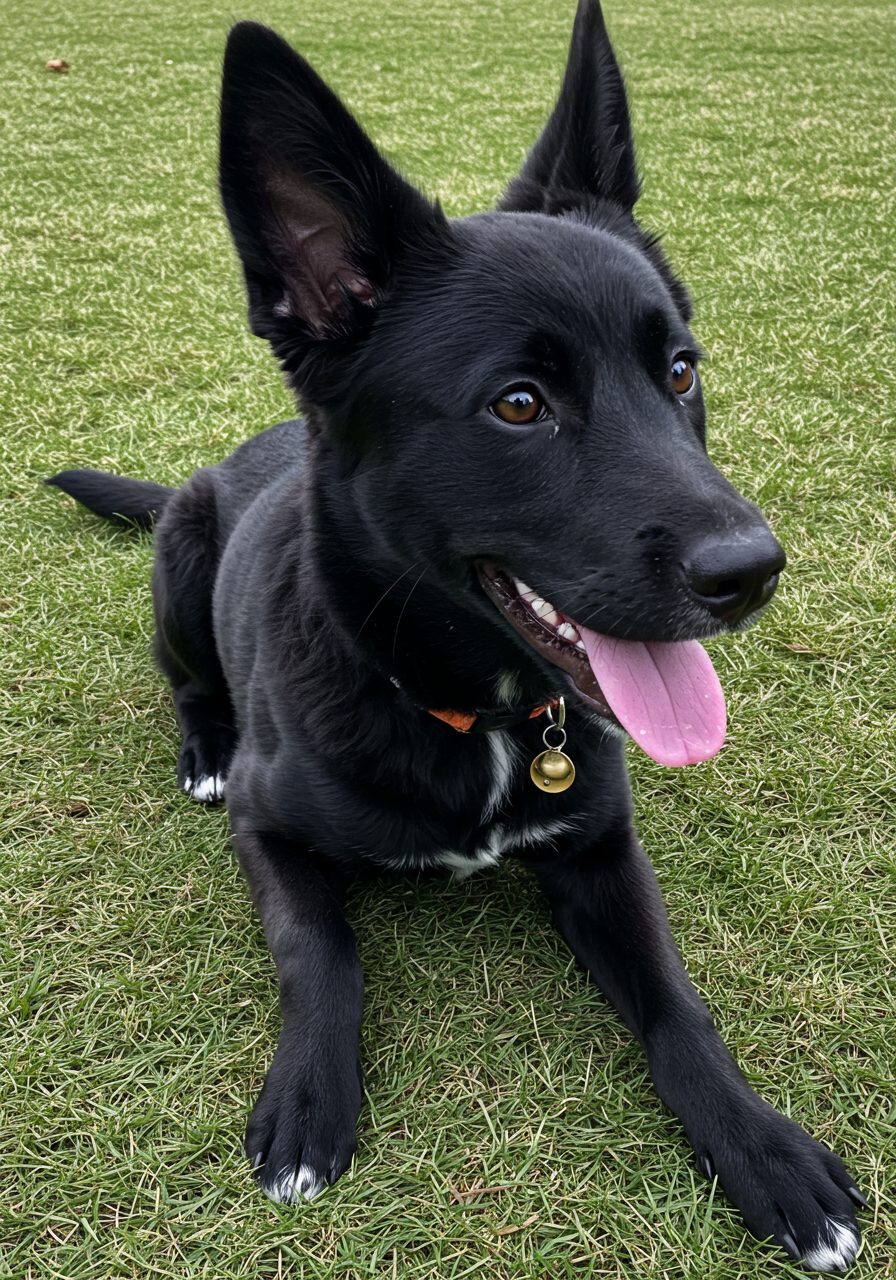
 Okay, Blackie's owner here, ready to share our journey!
I. Introduction: The Dream versus The Reality
A. The "Perfect Dog Walk" Fantasy
Every dog owner has that picture in their mind, don't they? That idyllic morning stroll, sun shining, birds chirping, and your beloved canine companion trotting gracefully by your side.The leash hangs in a gentle U-shape, loose and unburdened. Your dog pauses politely to sniff a bush, then looks up at you for approval, before continuing on their merry way.
It's the dream, the aspiration, the very reason many of us get dogs in the first place: for those peaceful, bonding moments out in the world.
B. Introduce Blackie (and the Problem)
Meet Blackie, my goofy, loving, tail-wagging best friend. He’s a beautiful black Labrador mix with boundless energy and a heart full of joy.He loves to cuddle, he's surprisingly gentle with children, and he could chase a ball for hours without tiring. He truly is a wonderful dog in so many ways.
But for a long time, our "walks" were less of a peaceful stroll and more of a full-body workout I never signed up for. It was a constant battle of wills, a test of strength, and frankly, a source of significant frustration.
The challenge? Clearly and definitively: **Extreme Leash Pulling.** Blackie, with all his lovable charm, was a pulling machine.
C. The Promise
If you're reading this, chances are you've experienced the dread of a walk. You know the feeling of a sudden jerk, the ache in your shoulder, or the embarrassment when your dog nearly takes down an unsuspecting pedestrian.Today, I'm sharing our journey from being dragged down the street to actually *enjoying* our time together. It wasn't easy, there were tears and moments of despair, but we overcame it, and you can too! Stick with me, and I’ll tell you exactly how we did it.
II. The "Before": Our Leash-Pulling Nightmare
A. Vivid Description of the Problem
Imagine this: you step outside, leash in hand, ready for a pleasant walk. Blackie, bless his enthusiastic heart, would immediately transform into a tiny, four-legged freight train.The moment his paws hit the pavement, it was full steam ahead. My arm would be yanked violently forward, my shoulder screaming in protest within minutes. I’d be gasping for breath trying to keep up, or worse, bracing myself against his sudden lunges.
He’d pull so hard, even on his harness, that he’d be making those awful choking and gagging sounds. It was heartbreaking to hear, but no matter how much I tried to correct him, he just kept pulling.
Every squirrel was an Olympic sprint challenge. Every interesting smell was a force-pull towards the nearest bush, regardless of my presence at the other end of the leash. Commands? Forget about it. He was deaf to "heel," "slow," or "easy." He was on a mission, and I was just along for the ride, whether I wanted to be or not.
The emotional impact on me was profound. Frustration was a constant companion. I felt embarrassed by his behavior, especially when he’d lunge and bark at other dogs or people, even though he was just overly excited and not aggressive.
Walks became a chore, something to dread, not a joy. I’d try to rush through them, counting down the minutes until we could be safely back inside. The physical pain in my arm and shoulder was a constant reminder of our daily struggle. I felt defeated, like I was failing Blackie and myself.
B. Why This Was Our "Biggest" Challenge
You might wonder why this particular issue was such a mountain for us to climb. Blackie, being a Labrador mix, is naturally very strong and incredibly high-energy. He's also easily over-stimulated by his environment.For him, the world outside was a thrilling amusement park, and he believed pulling was the fastest way to get to all the exciting rides. He had, unfortunately, learned that pulling got him where he wanted faster.
Every time I gave in, even a little, to his pulling, I was inadvertently reinforcing the behavior. He was also a very large dog, and his strength meant that even minor pulling felt like a significant force.
There were significant safety concerns too. For Blackie, the constant choking wasn't healthy. For me, the risk of falling or being injured was very real, especially on icy patches or uneven ground. And for others, Blackie's unpredictable lunges could be frightening, even if he meant no harm. This wasn't just an annoyance; it was a serious problem impacting our quality of life and safety.
III. Our Desperate Attempts (What Didn't Work... or Not Well Enough)
A. Initial, Uninformed Methods
When you're struggling, you try everything, often without understanding the underlying principles of dog behavior.My initial, instinctual reaction was to yank back on the leash whenever Blackie pulled. The idea was to create an unpleasant sensation that would deter him. What actually happened? It just made him pull harder in retaliation, or he’d cough and gag, which made me feel awful and changed nothing.
Then we tried the "stop and go" method, which I'd heard about. The theory is sound: if the dog pulls, you stop dead in your tracks. Only move forward when the leash is slack. We tried it, but inconsistently. Blackie would stop, sit for a second, get a brief moment of slack, then immediately lunge again the second I started walking. It felt like we were playing a frustrating game of Red Light, Green Light, with no real progress.
Treats were another avenue. My thought was, "If he pulls, I'll distract him with a treat!" Shoving treats in his face only worked for about two steps before he was back to pulling, or worse, he’d just snatch the treat and keep pulling, teaching him that pulling could also lead to a snack.
We went through every type of equipment imaginable without proper technique. We started with a flat collar, then moved to a chain collar (which I quickly abandoned because it felt too harsh and ineffective). We tried a regular back-clip harness, hoping a new piece of equipment would magically fix it.
The truth is, equipment *alone* is never the solution. It can be a tool, a very helpful tool, but without the correct training approach, it's just another piece of gear. None of these attempts created lasting change; they were momentary fixes at best, and at worst, they exacerbated the problem or left me feeling more discouraged.
B. The Growing Despair
Every walk felt like a failure. The embarrassment, the physical strain, and the sheer lack of progress chipped away at my confidence. I started avoiding busier areas where Blackie’s pulling was most pronounced and most embarrassing.Sometimes, I would even cut walks short, rationalizing that a shorter walk was better than a completely miserable one. I felt a sense of dread whenever it was time for Blackie's walk, which is the opposite of how you want to feel about spending time with your best friend.
I honestly thought Blackie was just "born a puller" and that we'd never have those peaceful walks I yearned for. I believed this was just "his personality" and something we'd have to live with. It was a truly disheartening period in our training journey.
IV. The Turning Point: A Glimmer of Hope
A. The Catalyst for Change
The truth is, there wasn't one single "lightbulb" moment that changed everything overnight. It was more of a series of compounding frustrations that finally pushed me to truly commit.It was after a particularly humiliating walk where Blackie nearly took me down chasing a leaf, resulting in a scraped knee and a bruised ego. I decided enough was enough. I couldn't keep living with this daily battle. I loved Blackie too much to let our walks be a source of misery.
I started consuming every piece of dog training information I could find online, watching countless YouTube videos, and even reaching out to friends who seemed to have perfectly behaved dogs. I was desperate for a real solution.
B. The "Aha!" Moment / New Philosophy
The key realization wasn't a trick or a magical piece of equipment, but a fundamental shift in my approach. The "Aha!" moment was understanding that I needed to change *my* behavior and *my* approach, not just try to *stop* Blackie from pulling.It wasn't about punishing pulling, but about *rewarding* the absence of pulling. It was about making the desired behavior (loose-leash walking) incredibly rewarding and pulling incredibly unrewarding.
This led us to the core strategy that finally worked: **Positive Reinforcement combined with strategic equipment.** We learned about the power of front-clip harnesses and consistent, high-value reward systems. This wasn't about force; it was about teaching Blackie what I wanted him to do, instead of just telling him what not to do.
V. Our Winning Strategy: Step-by-Step to Loose Leash Walking
A. The Right Tools for the Job
Before we even started, we made sure we had the proper gear. This wasn't a magic fix, but it was absolutely essential for setting us up for success. * Front-Clip Harness: This was a total game-changer for Blackie. Unlike back-clip harnesses that actually encourage pulling (because the dog can lean into them like a sled dog), a front-clip harness redirects the dog's momentum.When Blackie pulled, the leash connection on his chest would cause him to turn sideways, making pulling uncomfortable and inefficient, but without causing him any pain or choking. We used the Easy Walk harness, and it truly made a noticeable difference immediately. * High-Value Treats: Standard kibble wasn't going to cut it for Blackie when faced with the exciting world outside. We needed something irresistible. For Blackie, this meant cooked chicken pieces, small bits of cheese, or even hot dogs. The higher the value of the treat, the more motivated he was to pay attention to me and work for it.
These weren't just distractions; they were powerful motivators for good behavior. * Appropriate Leash: We used a standard 6-foot nylon leash. Non-retractable leashes are crucial for training because they provide consistent tension and teach the dog about the limits of their space. A good, comfortable grip for me was also important.
B. The Training Process (Detailed Steps)
This was the core of our transformation. It required dedication, patience, and unwavering consistency. * 1. Start Indoors/Low Distraction: We didn't immediately hit the bustling sidewalks. We began in the living room, then moved to the quiet backyard. The goal was to establish the behavior in an environment where Blackie could actually succeed, without the overwhelming stimuli of the outside world. This built a strong foundation before adding challenges.* 2. Mark and Reward Slack: This was the cornerstone of our positive reinforcement. The very *moment* the leash went slack, even for a second, I would loudly and enthusiastically say "YES!" (my verbal marker) and immediately deliver a high-value treat.
I wanted Blackie to understand that a loose leash equaled good things. We did this hundreds of times, celebrating every tiny moment of slack.
* 3. The "Tree" Method (Refined Stop-and-Go): This was our primary correction for pulling, but it wasn't a punishment. If Blackie pulled, I immediately became a "tree" – I stopped dead in my tracks. No talking, no yanking, no negotiating. Just stand still.
I waited patiently for the leash to slacken, for Blackie to look back at me, or for him to release the tension himself. *Then* and only then, would I take another step forward. If he pulled again, we stopped again. Every single time. Consistency was paramount here.
* 4. Direction Changes: This was another powerful tool to teach Blackie to pay attention to me. If he started to pull, or even if I just wanted to keep him engaged, I'd abruptly change direction – turn right, left, even spin around.
He quickly learned that pulling meant he *didn't* get to go where he wanted, and that to continue the walk, he needed to be attentive to my movements. This forced him to constantly check in with me, rather than fixating on what was ahead.
* 5. Engage and Reward Proximity: I started making walks fun *with* me, not just about reaching a destination. I'd carry toys sometimes, suddenly praise him for looking at me, or give him random treats just for walking nicely by my side, even if he wasn't pulling.
I specifically rewarded him for being "in position" – walking loosely beside my leg. This taught him that walking near me was where all the good stuff happened.
* 6. Gradual Increase in Distractions: Once Blackie was consistently walking nicely in the quiet backyard, we slowly moved to more challenging environments. We started with quiet streets during off-peak hours, then progressed to slightly busier parks, slowly exposing him to more triggers while maintaining absolute consistency with our "tree" method and positive reinforcement.
We didn't rush this; each step was only taken when he demonstrated solid understanding at the previous level.
C. The Pillars of Success
Our journey taught me that there were three non-negotiable pillars for success in Blackie’s training. * Consistency: This was the absolute non-negotiable. Every single person who walked Blackie – me, my partner, even the occasional dog walker – *had* to use the exact same method, every single time. One inconsistent walk could undo days of progress. This meant everyone was on the same page, knew the rules, and applied them without fail. * Patience: It didn't happen overnight. There were still bad walks, moments of backsliding, and days when I felt utterly defeated. But we kept at it. We celebrated small wins – two steps of slack, one successful pass by a squirrel – and didn't get discouraged by setbacks. Progress isn't linear, and recognizing that saved my sanity. * Positive Reinforcement: Making good choices incredibly rewarding was key to Blackie understanding what we wanted. Instead of focusing on what he *shouldn't* do, we heavily rewarded what he *should* do. This built a strong, positive association with loose-leash walking and strengthened our bond significantly.VI. The "After": Enjoying Our Walks Again
A. The Transformation
The difference is truly night and day. Now, our walks are relaxed, enjoyable, and something I genuinely look forward to every single day.Blackie still gets excited when the leash comes out, but instead of immediately launching forward, he mostly walks nicely by my side. He'll occasionally pull if something incredibly exciting catches his eye, but a quick "tree" stop or a change of direction is usually all it takes to get him back on track.
He checks in with me frequently, looking back to ensure I'm still there and sometimes just for a quick glance, which often earns him an unexpected treat. The stress, the arm soreness, the dread – they’re all gone. It's replaced by a feeling of partnership and calm.
B. Impact on Our Relationship
This transformation has done more than just improve our walks; it has deepened our bond significantly. Walks are now a true time for us to connect, explore the neighborhood together, and simply *be* in each other's company, rather than a battle of wills.I feel like a more confident and competent dog owner, and Blackie seems more secure and happy, knowing what’s expected of him and that good behavior is richly rewarded.
I'm incredibly proud of Blackie for learning and adapting, and I'm equally proud of us for sticking with it, even when it felt impossible. It's a testament to what consistency and understanding can achieve.
VII. Key Takeaways and Tips for Your Dog
A. Universal Principles
If you’re struggling with leash pulling, here are the core principles and tips that I truly believe can help you and your dog: * Consistency is King: Whatever method you choose, stick to it relentlessly. Every person, every walk, every single time. Inconsistency confuses your dog and slows progress. This cannot be stressed enough.* Find the Right Tools: A front-clip harness can make a huge difference, particularly for strong pullers, by giving you more leverage and redirecting their momentum. However, remember it's a tool to aid training, not a magic bullet without the actual training.
* Positive Reinforcement Works: Focus on rewarding the behaviors you want to see, rather than just punishing what you don't. Make loose-leash walking the most rewarding thing your dog can do on a walk. High-value treats and enthusiastic praise are your best friends.
* Patience is a Virtue: Progress isn't linear. There will be good days and bad days. Celebrate small wins and don't get discouraged by setbacks. Every small improvement is a step in the right direction. It’s a marathon, not a sprint.
* Manage Expectations: No dog is perfect 100 percent of the time. Aim for "better," not "flawless." There will always be moments of excitement or distraction, and that's okay. The goal is to make walks enjoyable and safe for both of you most of the time.
* Don't Be Afraid to Seek Help: If you're truly struggling and feel like you've tried everything, a certified professional dog trainer can provide invaluable guidance, personalized strategies, and hands-on support. Sometimes, an objective third party is exactly what you need to break through a plateau.
B. Encouragement
Your biggest challenge *can* be overcome. It takes time, effort, and a deep understanding of how dogs learn, but the rewards are immeasurable. The peace of a good walk, the strengthened bond, and the sheer joy of a happy dog make every bit of effort worth it. You’ve got this!VIII. Conclusion: Our Happily Ever After (On the Leash)
A. Recap
From a pulling nightmare that left my arm aching and my spirit drained to peaceful, enjoyable strolls, conquering leash pulling was undeniably our biggest training hurdle with Blackie.It was a journey of frustration, learning, and ultimately, immense reward.
B. Final Emotional Touch
Now, when I grab Blackie's leash, it's with anticipation, not dread. We've built a stronger bond and a happier life together, one relaxed walk at a time. Every loose leash and every happy sniff is a reminder of how far we’ve come.It’s a beautiful thing to simply walk alongside your best friend, connected not by a taut rope, but by trust and understanding.
Comments
Post a Comment